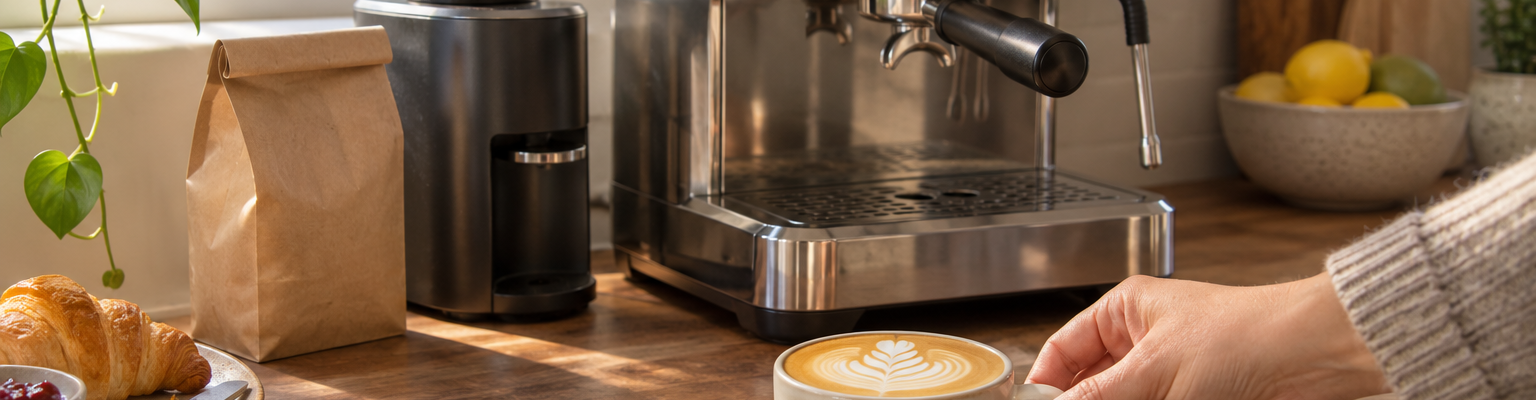
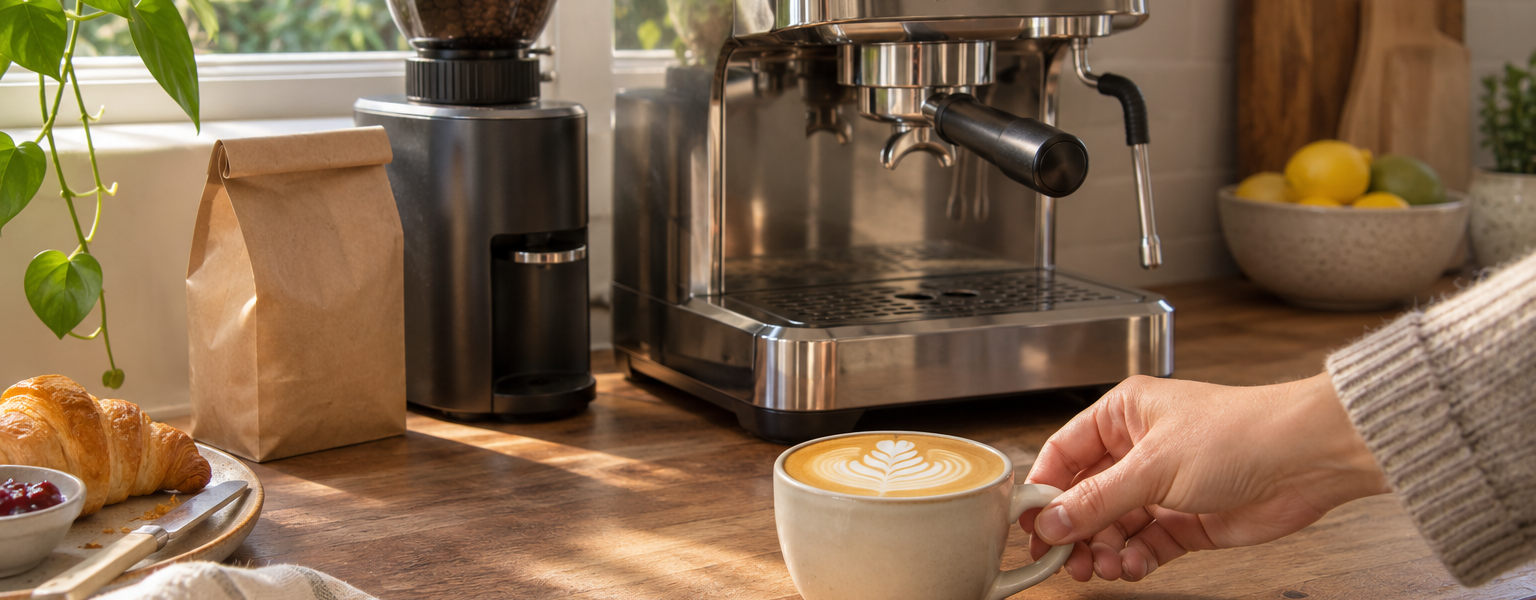

A home espresso setup is easiest to get to know when the first few mornings follow a familiar routine, whether there’s a rocket coffee machine on the bench or a compact machine tucked into a corner. Starting with one bag of beans gives the household a flavour to get familiar with while learning how the grinder and machine work together. Before deciding where to order coffee beans online, it helps to consider what goes into the cup most often, from a short black to a large flat white. A medium roast with chocolate or caramel notes can be a good starting point for someone who mostly makes milk coffees. For shoppers using coffee beans australia as a search term, the roast date, bag size and delivery information can help narrow the results.
Start with the coffee the household actually drinks
Tasting notes are easier to compare when there’s a familiar drink in mind. Someone who enjoys a flat white with a distinct coffee flavour might look for descriptions such as cocoa, toasted nuts or caramel. A person who usually orders a long black might prefer a coffee described as floral, fruity or bright. Those descriptions are a guide. The most useful test is how the coffee tastes in the cup the person makes every morning.
Bag size is worth considering alongside flavour. In a household where only one person drinks coffee, a smaller bag makes it easier to try something new and finish it before opening another. A household making several coffees a day may get through a larger bag comfortably. Shoppers can estimate how long a bag will last by dividing its weight by the amount of ground coffee they use each day. That estimate also helps with deciding when to reorder.
Keep the first recipe simple
A simple home espresso routine starts with beans that suit the drink, a consistent dose and small adjustments made one at a time at the grinder. The dose is the weight of ground coffee that goes into the basket. A small scale makes it easier to repeat that amount from one morning to the next. The same scale can measure the espresso in the cup, giving the person making it two useful numbers to compare when a shot tastes different.
Suppose the first shot runs quickly and tastes thin. On the next attempt, the grind can be made a little finer while keeping the dose and the amount of espresso in the cup the same. If the flavour improves, that gives the household a useful starting point for the next morning. A short note with the grinder setting, dose and cup weight is enough to pick up where the previous attempt left off.
For milk coffees, it also helps to use the same cup while trying a new bag. A shot may taste balanced in a small flat white and seem faint in a much larger mug. Keeping the cup and milk amount consistent makes it easier to judge whether an adjustment to the espresso improved the finished drink.
Set up the bench for a weekday morning
The most useful home setup is one people can move through comfortably. Keeping cups near the machine and the scale near the grinder saves reaching across the bench. A knock box within reach gives used grounds somewhere to go before the next coffee. In a small kitchen, it’s worth checking that the water tank and drip tray can be removed without shifting the machine or moving everything around it.
The end of the routine deserves a little thought, too. Emptying the grounds and returning the scale to its spot leaves the bench ready for the next person. Keeping the current bag beside the grinder makes it easy to see when supplies are getting low. Once the household has a recipe it likes, a quick note on the bag can make it easier to return to that coffee after trying something different.